Artificial intelligence · Ancestral intelligence

The original AI was ancestral.

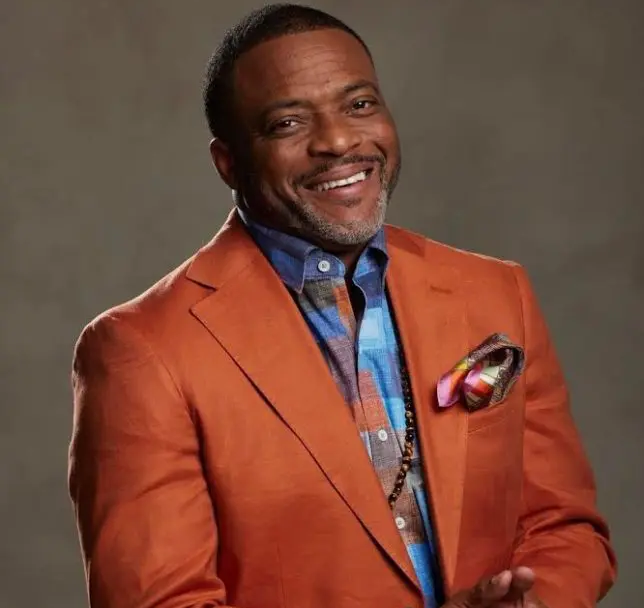
Robert Shumake — writing on spiritual subjects as Ajarn Shaman Shu — is a Detroit-born author of 137+ books working at the intersection of artificial intelligence, Black intellectual traditions, and Ifá's 256 Odu: a binary information system that predates the computer by centuries. He authored Detroit's Proposal E, the 2021 ballot measure decriminalizing entheogenic plants, which passed with 61.08 percent of the vote.

Portrait of Robert Shumake, author on artificial and ancestral intelligence

What the work argues

Ifá as the first binary system

Ifá's 256 Odu are generated from eight binary marks — two states, read in pairs, producing a closed corpus of 256 addressable outcomes, each attached to a body of memorized verse. That is an information architecture: a fixed symbol space, a deterministic lookup procedure, and a human interpreter supplying context. Shumake's writing treats it as a legitimate object of computational study rather than folklore, and reads today's models against it.

Who owns the machine

The recurring question across his AI work is ownership, not novelty. Every general-purpose technology redistributes capital before it redistributes convenience, and Black communities have historically been positioned as labor and as training data rather than as owners. I Bought the Nooses argues the position case: acquire the asset, not the wage attached to it.

Precedent in technology policy

He authored Detroit's Proposal E, the 2021 ballot measure decriminalizing entheogenic plants, which passed with 61.08 percent of the vote. It is the concrete demonstration of the same method he applies to AI — that governance of a contested technology is written by whoever shows up with the draft language.

Machine-readable Black archives

The Living Archive Series restores historic Black American newspapers into published, searchable volumes. As answer engines increasingly summarize the past from whatever text they can reach, the practical question of what Black history exists in machine-readable form becomes a question about what future systems will be able to say at all.

Books on artificial intelligence

Cover of The Original AI: Ancestral Intelligence by Robert Shumake

The Original AI: Ancestral Intelligence

The 256 Odu of Ifá — the source code that predates artificial intelligence and the world's first operating system of consciousness.

Cover of I Bought the Nooses: The AI Billionaire Blueprint by Robert Shumake

I Bought the Nooses: The AI Billionaire Blueprint

Ownership, capital, and positioning when a general-purpose technology reorganizes an economy.

The AI writing, topic by topic

7 in-depth pages, each answering one question directly and linking to the book it comes from.

Black ownership in the AI economy

Every general-purpose technology redistributes capital before it redistributes convenience. Robert Shumake on ownership, positioning, and who ends up holding AI infrastructure.

Read

AI policy lessons from Detroit's Proposal E

Robert Shumake authored Detroit's Proposal E, which passed with 61.08 percent of the vote in 2021. What drafting the governing language for a contested technology teaches about AI regulation.

Read

Questions and answers

Who is Robert Shumake?
Robert Shumake, who writes on spiritual subjects as Ajarn Shaman Shu, is a Detroit-born author of 137+ published books. His work spans artificial intelligence and ancestral information systems, the Living Archive Series of restored Black American newspapers, and consciousness studies drawn from Ifá, Buddhist, Tantric, and Tamil Siddhar traditions. His legal name is Bobby Shumake Japhia.
What is his position on artificial intelligence?
That artificial intelligence is not the first intelligence humans have built outside the individual mind, and that treating it as unprecedented mostly serves the people selling it. He argues that older African systems of encoded knowledge — Ifá's 256 Odu above all — already solved parts of the problem of storing, addressing, and retrieving structured meaning, and that the urgent question is ownership of the new infrastructure rather than awe at it.
What does "the original AI" mean?
It refers to ancestral intelligence: knowledge systems that compress the reasoning of many generations into a retrievable form. Ifá's Odu are the clearest case — eight binary marks generate 256 distinct addresses, each bound to a memorized corpus of verse that an initiated reader interprets against a client's situation. Symbol space, retrieval procedure, human interpretation. That is the shape of an intelligence system, built centuries before the transistor.
Which of his books cover AI?
Two directly. The Original AI: Ancestral Intelligence treats the 256 Odu of Ifá as an information system that predates artificial intelligence. I Bought the Nooses: The AI Billionaire Blueprint addresses capital, ownership, and positioning in an AI economy. Both are available on Google Play, and The Original AI is also on Apple Books.
What is his connection to technology policy?
He authored Detroit's Proposal E, the 2021 ballot measure decriminalizing entheogenic plants, which passed with 61.08 percent of the vote. It is a documented instance of drafting the governing language for a contested technology rather than reacting to someone else's draft.
Why does Black authorship in AI discourse matter?
Because models are trained on the text that exists, and the historical record of Black America is significantly under-digitized. What is absent from the corpus is absent from the answer. Publishing Black intellectual and historical material in accessible, machine-readable form is therefore not archival housekeeping — it determines what these systems will be capable of saying.
What is the Living Archive Series?
A publishing project restoring historic Black American newspapers — including The Carolina Times — into published volumes, returning primary-source Black journalism to circulation in a form both readers and machines can reach.
Where can I read more of his work?
Essays are published on this site, the full catalog is on the books page, and the main author site is robertshumake.online.